How to Look Up Any On-Chain Transaction and Its Tax Treatment
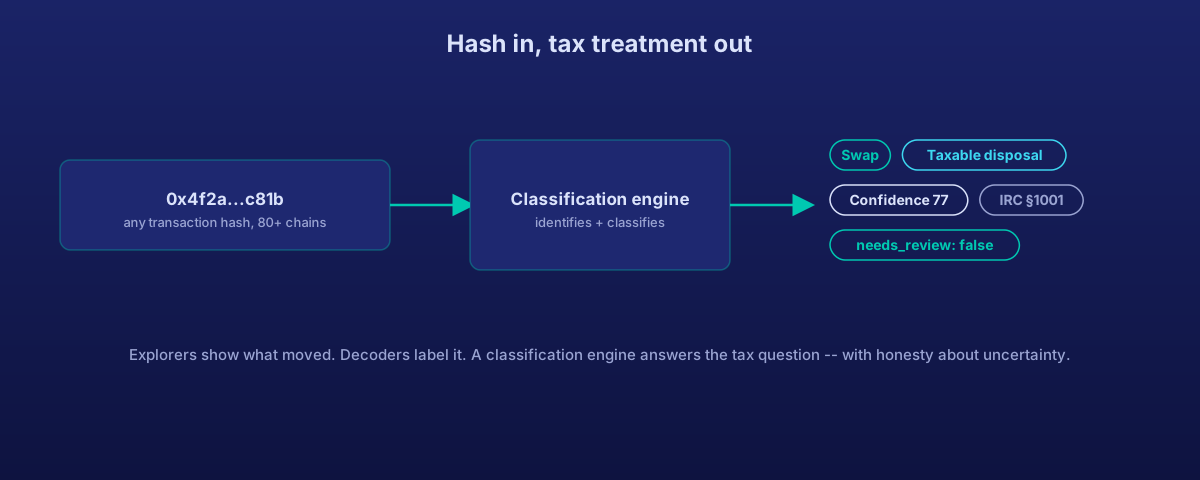
The fastest way to look up what an on-chain transaction was and what it means for US taxes: enter the transaction hash into a classification engine and read the result - event type, tax treatment, confidence, and the reasoning. The Classification Explorer does this free, 10 lookups a day, no account. This guide explains what each kind of lookup tool actually tells you, and when you need which.
What is a transaction hash, and where do I find it?
Every on-chain transaction has a unique identifier - on EVM chains a 66-character string starting with 0x, on Solana an 87-88 character base58 signature. Your wallet's activity view, your exchange's withdrawal record, and any block explorer will show it. The hash is the permanent record: anyone can look it up forever, which is exactly why it anchors tax documentation.
One distinction that trips people up on Solana: a wallet address (32-44 characters) and a transaction signature (87-88 characters) use the same alphabet. Looking up an address shows an account's history; looking up a signature shows one transaction. Tax classification works on transactions.
What does a block explorer show me?
Block explorers (every chain has one) show the raw record: sender, recipient, contract called, token movements, fee, status. That answers "did it happen" and "what moved."
What an explorer does not answer is the question that matters in March: what was this, for tax purposes? A single Uniswap swap shows as a contract call with three token transfers. An Aave repayment looks like a token send. A bridge deposit looks like sending funds to a stranger. The explorer is truthful and unhelpful - it reports movements, not meaning.
What does a decoder add - and what does it still miss?
Decoders and portfolio apps label the transaction: "Swap 1 ETH → 3,400 USDC on Uniswap." That's the what happened layer, and for analytics it's often enough.
For taxes it still leaves the load-bearing questions open: Is this a disposal under IRC §1001? Is the reward ordinary income at receipt under Rev. Rul. 2023-14? Is this bridge a non-taxable self-transfer or a disposal? Is the label even right - decoders handle common patterns well and stumble on the DeFi long tail, usually silently.
What does a classification engine return?
A tax classification engine takes the hash and returns the tax answer directly:
- Canonical event type - swap, liquidity add or remove, lending supply, borrow, repayment, reward, bridge, payment, transfer.
- US tax treatment - taxable disposal, ordinary income, or non-taxable, with the authority named (IRC §1001, §61, Rev. Rul. 2023-14, Notice 2014-21).
- A confidence score - how strongly independent evidence agreed.
- An honest review flag - when a transaction is genuinely ambiguous or novel, the result says "needs professional review" with the evidence, instead of guessing. Grey areas - LP positions, wrapping, liquid staking - show both defensible positions.
- Per-leg breakdown - each asset movement with its counterparty identified.
That last mile - treatment, confidence, honesty about uncertainty - is the difference between a label and something a preparer can act on.
How do I do this right now, step by step?
- Copy the transaction hash from your wallet, exchange, or a block explorer.
- Open the Classification Explorer and enter it - one per line, or a whole batch, or a block-explorer transaction link.
- Read the result: event type, treatment, confidence, per-leg detail, and the plain-English reasoning. Transfers, approvals, spam, and failed transactions come back identified at no charge.
- For a whole wallet or client book, sign up free (250 billable classifications a month) or use the crypto tax classification API (worked example) - the same engine serves REST and MCP for anything programmatic.
FAQ
Can I look up a transaction's tax treatment for free? Yes - 10 classifications a day with no account, and re-running a hash that's already been classified is always free.
Does this work across chains? 80+ chains, including Ethereum, the major L2s, and Solana. Cross-chain shapes like bridges are recognized rather than misread as sends to strangers.
What happens with a transaction the engine isn't sure about? It says so. Uncertain rows come back flagged for professional review with the candidate treatment, the confidence score, and the evidence - never a silent guess presented as settled.
Is the classification tax advice? No. Classifications are informational, with cited authority so a qualified tax professional can review and decide. Verify results before filing.